
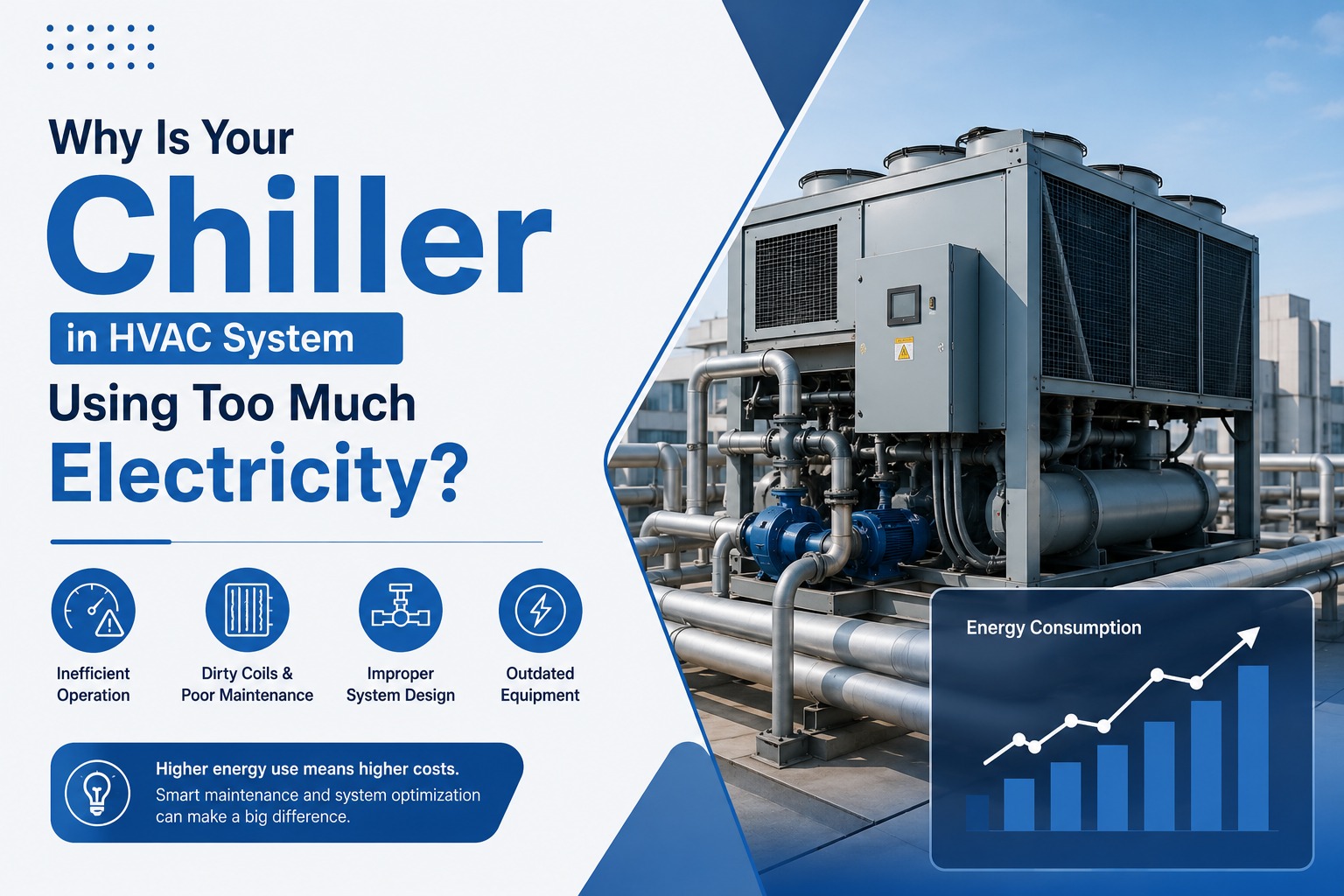
If you are not making changes to your cooling equipment, but your monthly electricity bill continues to go up, look no further. The likely answer is right in front of you. Your cooling equipment is likely the reason. Saudi Arabia is hot and a chiller in HVAC system can run nonstop for many months, and small inefficiencies mean large expenses. This is where you need to start to figure out the answer. This is a clear breakdown of the reasons your energy costs are going up. Visit our page if you want to get full information chiller system.
What Causes High Electricity Usage in a Chiller in HVAC System?
Dirty Condenser Coils and Restricted Airflow
Dust and dirt prevent heat transfer to condenser coils causing the chiller to work harder. Constantly cleaning the coils is essential in a dusty environment such as Saudi Arabia to prevent a build-up of electricity costs due to an inefficient operation.
Low Refrigerant Charge or Refrigerant Leaks
A leak or insufficient charge of refrigerant will reduce the cooling capacity of a vapor compression chiller. In order for the system to maintain the required cooling level, the system would need to run for a longer period of time. This would result in an increase in energy consumption and a more significant load on the compressor.
Incorrect Chiller Sizing
An oversized or undersized chiller can be inefficient due to insufficient adjustment for the building’s actual cooling load capacity. Correct chiller sizing enables the system to operate in the efficiency range designed for the load and eliminates wastage of energy.
Poor Chilled Water Flow
Insufficient or improper chilled-water flow can reduce heat transfer and prevent the chiller from operating efficiently. Issues such as clogged strainers, pump problems, or incorrect flow rates can increase the work required to maintain the desired cooling conditions.
Inefficient Compressor Operation
The compressor is one of the major electricity-consuming components of a vapor-compression chiller. Compressor wear, operating conditions, or control problems can reduce efficiency and cause the chiller to consume more electricity than necessary.
Poor Maintenance and Fouled Heat Exchangers
A poorly maintained chiller can gradually lose efficiency as heat-transfer surfaces become fouled and components wear or operate outside their intended conditions. Regular inspection and maintenance help identify efficiency problems before they lead to excessive electricity consumption.
How to Reduce Electricity Costs From an Air Cooled Chiller System
Strategic, systematic maintenance should be the foundation of any machine management strategy. Maintaining condenser coils should be a priority (especially during the dusty season) and should be performed at least every few months. In addition, a professional assessment of refrigerant usage should be scheduled every year at minimum. High efficiency chiller systems consume far less energy compared to outdated systems. Additionally, ductwork improvements which include system insulation can alleviate stress on the chiller.
When to Call Airlution for Ductwork Issues Affecting Your Chiller System
Sometimes the chiller isn’t the problem — the ductwork is. Leaky joints or poor insulation force the chiller system to work harder, raising electricity costs even when the equipment is healthy. Airlution specializes in HVAC ductwork design and repair, helping fix airflow losses and duct leaks that quietly increase a chiller system’s workload. If your bills stay high after chiller maintenance, contact us at Airlution to inspect the ductwork first.
Conclusion
High electricity usage from a chiller in HVAC system is rarely random — it’s usually caused by dirty coils, refrigerant issues, or a mismatched system size, all made worse by Saudi Arabia’s intense heat. Regular maintenance and timely professional checks can significantly lower your energy bills. Don’t wait for a breakdown to force your hand — take control of your cooling costs now and get your chiller system inspected before the next heat wave puts it to the test.
FAQs:
Why does my chiller in HVAC system use so much electricity?
Extreme heat plus dirty coils or low refrigerant push power use higher.
How often should a chiller system be serviced in Saudi Arabia?
Clean coils every 2–3 months; full inspection twice a year.
Can dirty ductwork raise my chiller’s electricity bill?
Yes, leaks let cool air escape, forcing the chiller to work harder.
What is the average lifespan of an HVAC chiller system?
Around 15–20 years with proper maintenance.
How do I know if my chiller is oversized or undersized?
Short cycling means oversized; running non-stop means undersized.