
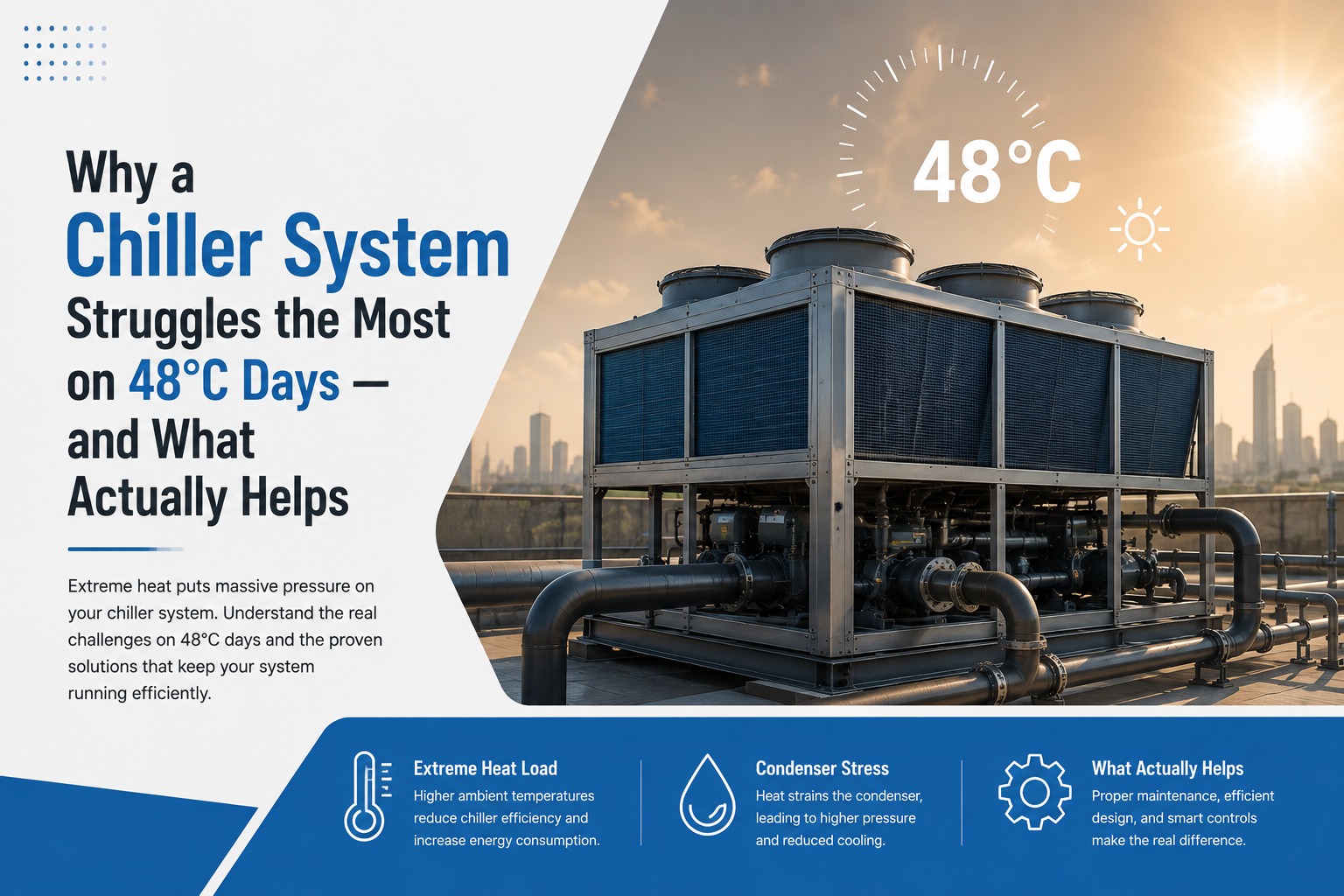
Ask any facility manager in Riyadh what happens to their cooling in July or August and you’ll hear the same response: their chiller system that worked fine in April suddenly runs behind. At 48°C and above, even a well-maintained chiller in HVAC system begins to lose capacity. This isn’t a random failure of the equipment, this is physics. Knowing how to reduce the chiller’s burden during extreme heat, rather than just reactive chiller changes, helps save Saudi Arabian businesses from the peak season failures. Visit our page if you want to avail hvac service for your chiller system.
What Happens Inside a Chiller System at 48°C
Every HVAC chiller system removes heat from the building and transfers it to the outside air. If temperatures outside get to 48°C or higher, there isn’t much room for the heat to escape leaving the refrigerant to work very hard to accomplish the task that would normally be much easier at 35°C. The result of the increased effort on a chiller system is increased head pressure. With a pressure increase, compressors draw more current, run hotter, and wear out more quickly.
What Actually Helps During Peak Heat
Keep Coils and Condensers Clean
Dust and debris on coils can reduce heat transfer and cooling efficiency. Keeping these components clean helps the chiller reject heat more effectively during extreme summer temperatures.
Check Refrigerant Charge Before Peak Summer
The correct refrigerant charge is essential for efficient cooling. Professional refrigerant checks before peak summer can help identify issues that could affect chiller performance during extreme heat.
Maintain Proper Airflow Around Cooling Equipment
Adequate airflow around outdoor cooling equipment helps remove heat efficiently. Blocked airflow or poor ventilation can increase system stress when temperatures reach 48°C.
Use Properly Designed HVAC Systems
A properly designed HVAC system helps match cooling capacity with the building’s actual requirements. Poorly designed or incorrectly installed HVAC components can make cooling more difficult during peak heat.
Install and Seal Ductwork Properly
Poorly installed or leaking ductwork can allow conditioned air to escape before it reaches the required spaces. Proper duct installation and sealing help maintain efficient airflow and reduce cooling losses.
Insulate Ductwork to Reduce Heat Gain
Proper duct insulation helps protect cooled air from the intense outdoor heat, particularly when ductwork passes through hot spaces or areas exposed to high ambient temperatures.
Schedule Professional Maintenance Before Summer
Pre-summer maintenance can identify potential problems before extreme temperatures arrive. Professional inspections, airflow checks, refrigerant-related checks, and manufacturer-recommended maintenance can help keep the cooling system operating reliably.
Keep Air Intakes and Ventilation Paths Clear
Restricted air intake and blocked ventilation paths can reduce airflow and affect cooling performance. Keeping these areas clear helps the system operate more efficiently during peak heat.
Plan HVAC and Ductwork for Extreme Saudi Conditions
HVAC systems and ductwork should be properly designed for the building’s cooling requirements and Saudi Arabia’s extreme climate. Proper planning can help the cooling system handle demanding summer conditions more effectively.
How Airlution Keeps Your Chiller System Running Strong Through Saudi Arabia’s Hottest Days
48°C doesn’t scare Airlution — it’s exactly the kind of heat we prepare HVAC systems for. We provide HVAC installation and ductwork solutions designed to support reliable chiller system performance in extreme summer conditions. From properly installed HVAC components to well-planned ducting, we help your cooling system perform when the heat is at its toughest. Contact Airlution today for professional HVAC and ductwork services.
Conclusion
Saudi Arabia’s summers don’t slow down, so your cooling strategy can’t either. A chiller system that survives 48°C isn’t built by chance — it’s the result of clean coils, sealed ducts, and maintenance done ahead of time. Most breakdowns build up quietly until the hottest week forces the issue. Don’t let your building be caught off guard. Talk to Airlution today and get your chiller system inspected and ready before the heat tests it for you.
FAQs:
Why does a chiller system lose power in extreme heat?
Above 48°C, heat can’t escape well, so pressure rises and cooling drops.
How often should a chiller system be cleaned in summer?
Every one to two months to prevent dust from cutting capacity.
What signals a chiller system is struggling?
Longer run times, higher bills, uneven cooling, unusual noise.
Is water-cooled better for Saudi Arabia’s heat?
Yes, for large buildings — it handles extreme heat more efficiently.
Can bad ducts overwork a chiller system?
Yes. Leaky ducts force the chiller system to run longer and harder.