
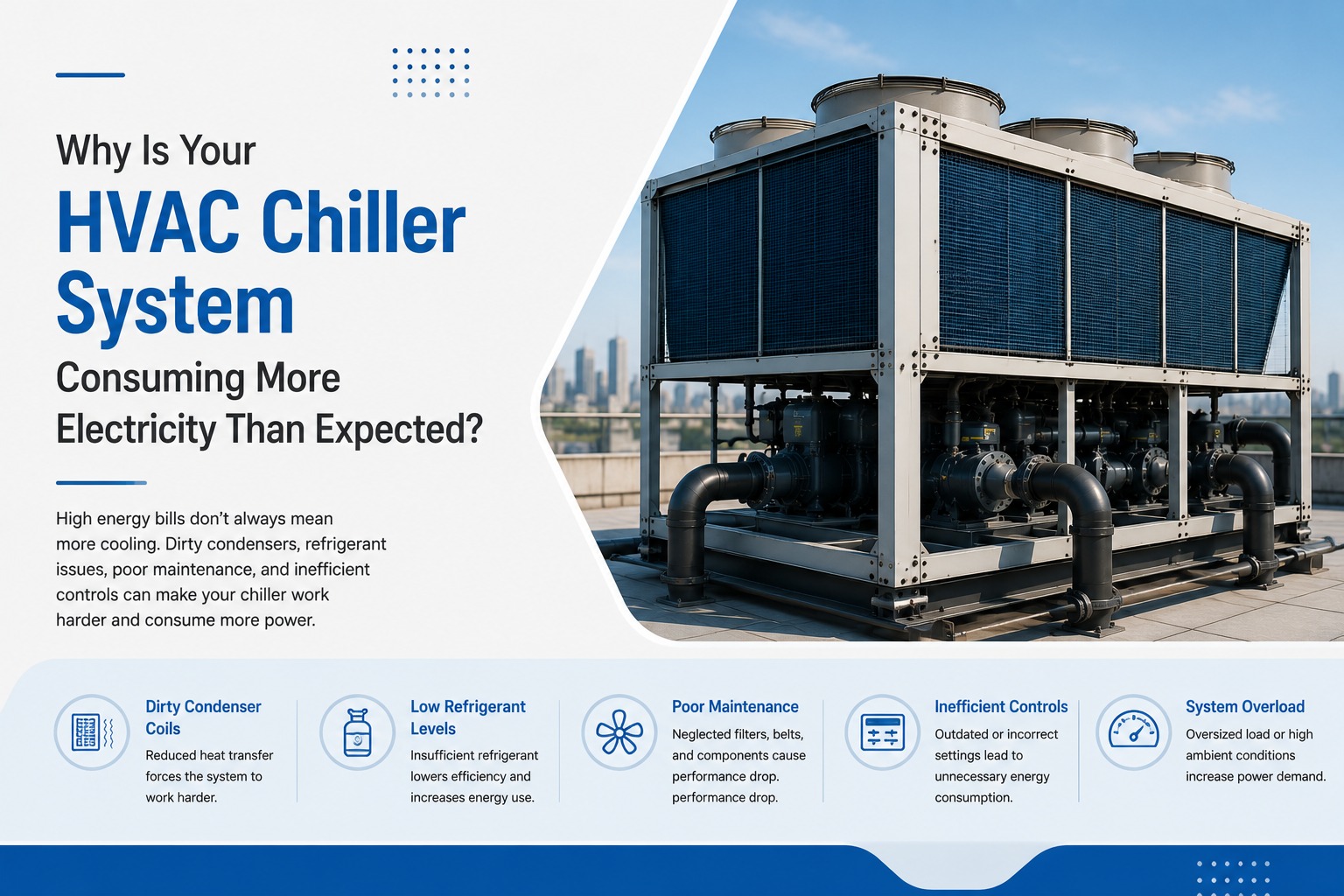
You may never notice the increase in your electricity bills until your HVAC chiller system causes it to skyrocket. Because of the heat in Saudi Arabia, chillers are constantly working at full capacity during summer months, and even minor inefficiencies can cause hundreds or even thousands of riyals to be added to your bill each month. Addressing the extra consumption and the factors that cause it allows you to get to the root of the problem, and helps you from having to pay the extra cost every year.
Common Reasons Your HVAC Chiller System Uses More Power Than It Should
Incorrect Chiller Sizing
A small chiller has to work harder and for longer periods of time to meet the temperature requirements of the space. Oversized chillers can be inefficient in low cooling demand situations. Building cooling capacity and building demands must match.
Inefficient Temperature and Control Settings
Inadequate temperature settings of chilled water, insufficient control strategies, and incorrect configurations of controls can cause chillers to work excessively. The most efficient chillers optimize temperature settings in conjunction with control strategies.
Clogged Filters and Restricted Airflow
Filters that have not been replaced impact the efficiency of the HVAC system along with the excessive strain of keeping the required indoor temperature. Restricted airflow may require the system to work longer and harder to satisfy cooling demands, which increases the energy consumption.
Poor Ductwork Design and Air Leakage
Poorly designed, sealed, or insulated ductwork can allow air to escape or gain heat, impacting cooling efficiency and increasing cooling demand on HVAC systems. Correct duct installation for HVAC chiller systems minimizes these losses and allows cooling efficiency to be highly maintained.
Poor HVAC Installation and System Setup
Unprofessional air conditioning system setup, faulty balancing of airflow in the system, or even poor component placement can decrease overall system efficiency. The correct placement and balance of the system and its components help avoid wastage of energy.
Extreme Outdoor Temperatures and Poor Heat Rejection
During summer, conditions in Saudi Arabia make cooling difficult due to extreme outdoor temperatures. If condenser airflow or heat rejection conditions are poor, the chiller will use more energy to maintain the same level of cooling.
Aging Compressors and Worn Components
Because some mechanical elements start to lose performance due to aging or wear, a system’s efficiency gradually starts to decline. When an issue such as this one is not addressed, the system may require extra electricity usage in order to yield the same cooling result.
Refrigerant Leaks or Incorrect Refrigerant Charge
A refrigerant leak or incorrect refrigerant charge can reduce the system’s ability to transfer heat efficiently. This can increase operating time and energy consumption while reducing overall cooling performance. Refrigerant-related work should be handled by qualified HVAC professionals.
Poor Preventive Maintenance
When filters, coils, controls, and other system components are not maintained properly, efficiency can gradually decline. Regular professional maintenance helps identify developing problems and keeps the HVAC system operating closer to its intended efficiency.
High Cooling Loads and Poor Building Heat Management
A chiller might use more electricity because the building is having a more intense cooling demand than estimated. Lack of proper building insulation, excessive heat gain, open doors, or poor building enclosure conditions, for example, may result in increased cooling demand on the HVAC system.
Simple Ways to Reduce Chiller System Energy Waste
As each degree lower towards optimal temperatures may consume considerably more energy, set realistic temperature goals instead of overcooling. Instead of waiting for a drop in performance, clean coils and filters on a schedule. Have a technician check the duct seals, refrigerant levels, and the health of the compressor twice a year, or ideally once before the summer season. Building automation systems that monitor the performance of chillers in real time are becoming commonplace in Saudi commercial buildings in 2026 and help identify inefficiencies before they appear on the utility bills.
Why Airlution Is Saudi Arabia’s Go-To Name for Chiller System Ductwork
Airlution’s expertise is in ductwork. That means they don’t sell or manufacture chillers. Their expertise is installing ducts, sealing ducts, insulating ducts and balancing airflow to ensure the chiller system works at optimal levels. This focus on ductwork is the reason why most of the large commercial buildings in Saudi Arabia rely on Airlution to cover costs on their projects. Contact Airlution today and book an assessment on your ductwork before the price increases again.
Conclusion
Electricity spikes are typically the result of a dirty coil, insufficient refrigerant, aging components, or poorly installed ducts on your HVAC chiller system. Most of these problems can be avoided by performing regular system maintenance and being familiar with the chiller system HVAC diagram. If your utility bills are increasing with no apparent reason, have your duct work tested before the next Saudi summer puts your chiller system under stress and increases your electricity costs.
FAQs:
Why is my HVAC chiller system using more electricity?
Usually dirty coils, low refrigerant, or duct leaks.
How often should a chiller system be serviced?
Twice a year, ideally before summer.
Can bad ductwork raise my chiller system’s bill?
Yes, leaks force the chiller to work harder.
How do I know if my chiller system is the wrong size?
Uneven cooling or non-stop running are the signs.
Fastest way to cut chiller system energy costs?
Set realistic temperatures and check ducts for leaks.