
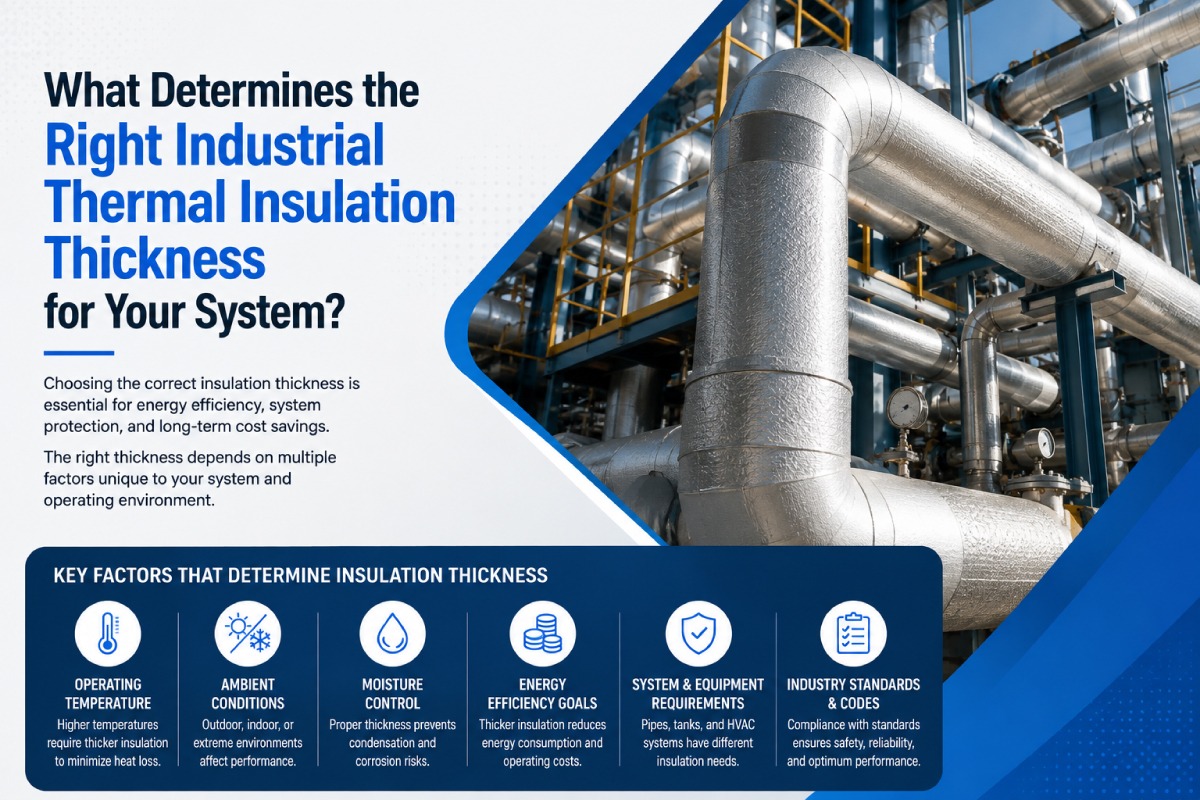
Increasing industrial ther
mal insulation thickness is not the only concern when selecting industrial thermal insulation. In Saudi Arabia, the harsh climate and challenging conditions of the environment make selecting the improper thickness lead to energy loss, condensation, overheating and increased costs. The correct duct thermal insulation thickness used for pipes, tanks, equipment and HVAC systems will be dependent on a number of conditions. Understanding these conditions allows the facility owner and the design engineer to select a thermal insulation system that will provide the required performance at the lowest cost.
What Determines Industrial Thermal Insulation Thickness?
Insulation thickness varies depending on the operating temperature of the system, type of insulation, desired surface temperature, surrounding conditions, and an acceptable heat loss or heat gain. For example, a hot pipe and a pipe containing chilled water may need different levels of insulation. It is important to get the right level of insulation to allow the system to operate safely and efficiently in its surroundings. In some cases, the thickest insulation may not provide the best result.
How Does Operating Temperature Affect Insulation Thickness?
Temperature is critical when choosing industrial thermal insulation. When dealing with systems transporting high temperature media like steam or thermal fluids, insulation capable of operating at those elevated temperatures is required. When dealing with low temperature media, such as cold systems, insulation must be chosen that limits heat gain and prevents condensation. Thus, thermal insulation must be selected depending on the operating temperature of the system and cannot be generalized for all cases.
Does Location Change the Required Insulation Thickness?
Yes, the same industrial system may demand different insulation analyses, depending on the site. Outdoor equipment, rooftop ducts, exposed pipes, and process systems are all subject to sunlight, high ambient temperatures, wind and moisture, so industrial HVAC insulation is important in order to preserve the thermal performance. Indoor systems have more controlled environments. For Saudi Arabia facilities, these environmental factors should be taken into consideration regarding the appropriate industrial thermal insulation thickness. Visit our page if you want to avail thermal insulation service in ksa.
What Should You Check Before Choosing the Thickness?
Consider system type, material(s), operating temperature(s), pipe or duct size, location, moisture exposure, and thermal performance before purchasing insulation. For more complicated systems, consider thickness in accordance with the project requirements and the best practices in the industrial thermal insulation industry. Airlution offers quality installation of thermal Industrial insulation adapted to your specific system. Need help with an insulation project? Contact Airlution for the right solution for your facility.
Conclusion
The best thickness for industrial thermal insulation for temperature control is a combination of many factors. These include the temperature of the system, the nature and dimensions of the duct or pipe, location, moisture, material and required thermal performance. For outdoor and HVAC installations in Saudi Arabia, the local climate must be considered. The right thickness selected for a system ensures that energy is not needlessly wasted and that each succeeding layer of insulation is doing optimal work for long-term efficiency and performance.
FAQs:
What Is the Best Thickness for Industrial Thermal Insulation?
It depends on temperature, material, system size, location, and required performance.
Is Thicker Industrial Thermal Insulation Always Better?
No. The right thickness should meet performance needs without unnecessary cost.
How Do You Choose Insulation Thickness for HVAC Ducts?
Consider duct size, temperature, location, humidity, and heat control needs.
Does Saudi Arabia’s Heat Affect Insulation Thickness?
Yes. High temperatures and sun exposure can increase insulation requirements.
How Much Industrial Thermal Insulation Do Pipes Need?
It depends on pipe size, operating temperature, material, and thermal requirements.