
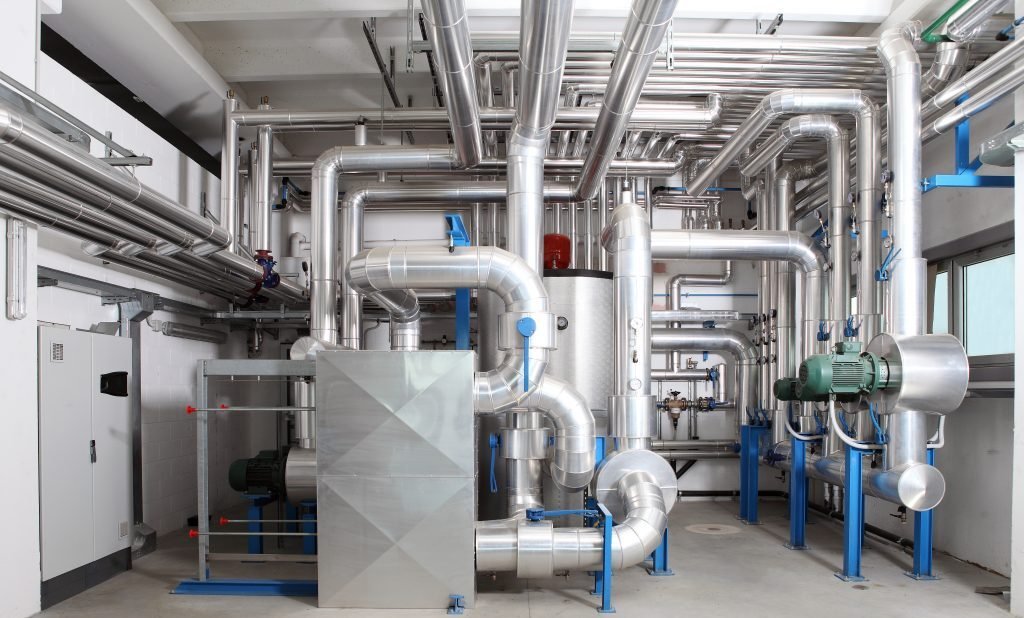
Heating and Air Conditioning Systems are a vital part of what makes our homes and businesses feel comfortable, helps us with temperature control as well as air quality control. These devices make use of different HVAC parts, including the plenum box HVAC, AC vent, fan coil duct, flexible duct hose, duct axial fan, and the ducted fan coil unit, for better efficiency. Yet, these features eventually begin to have the same issues; which reduce the unit’s ability to work effectively, raise your energy costs, and make your home or business an uncomfortable place to be.
Here, we’re going to break down some of the most common problems that can plague HVAC parts, why those issues happen, and what you can do about them. Finding and correcting these problems early will add years to the life of your HVAC system, prevent frequent repair calls and keep things comfortable all year long!
Plenum Box HVAC: Airflow and Pressure Problems
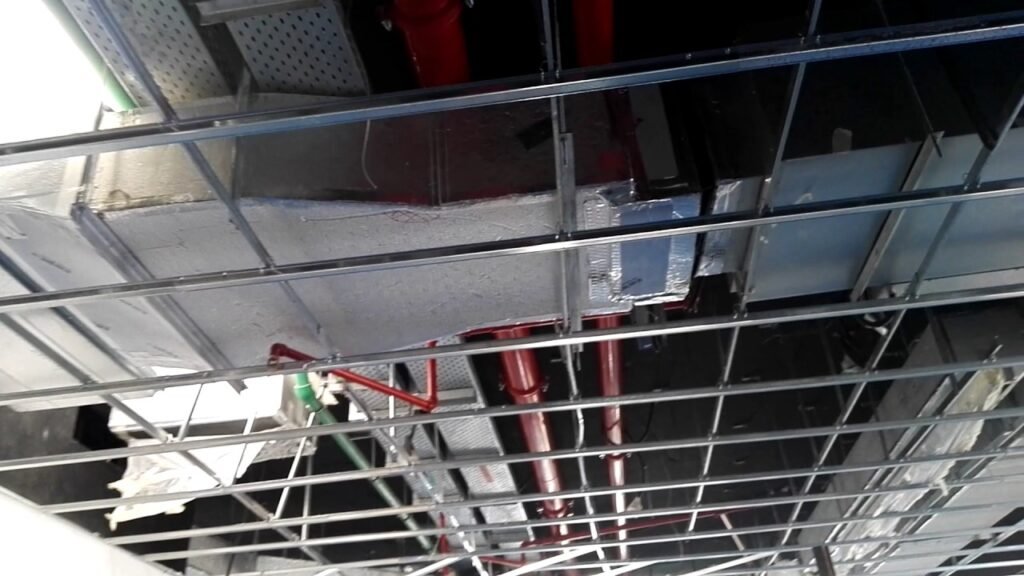
The plenum box HVAC is a vital part of any HVAC system. It is the central hub that helps distribute the conditioned air to various parts of the building through a network of ducts. A malfunctioning plenum box can lead to poor airflow, inefficient heating or cooling, and increased energy consumption.
Common Problems with Plenum Box HVAC:
- Clogged Filters: The plenum box typically houses filters that clean the air before it enters the ductwork. Over time, these filters accumulate dirt, dust, and other debris, reducing airflow and causing the system to work harder than necessary.
- Air Leaks: If there are any cracks or gaps in the plenum box, conditioned air can leak out. This reduces the efficiency of the HVAC system, as it forces the system to work overtime to maintain the desired temperature.
- Improper Sizing: If the plenum box is not the right size for your HVAC system, it can cause air pressure imbalances, leading to uneven airflow throughout the building.
How to Fix Plenum Box HVAC Problems:
- Clean or Replace Filters: Regularly inspect and replace or clean the filters inside the plenum box to ensure proper airflow and filtration. This will help the system run more efficiently and keep the air clean.
- Seal Leaks: If you notice any air leaks, inspect the plenum box for cracks or gaps. Use duct sealant or aluminum tape to close the leaks and prevent air loss.
- Check Sizing: If the plenum box is too small or too large, consult a professional HVAC technician to ensure it is correctly sized for your system. Proper sizing ensures optimal airflow and pressure balance.
AC Vent Issues: Blockages and Poor Air Distribution
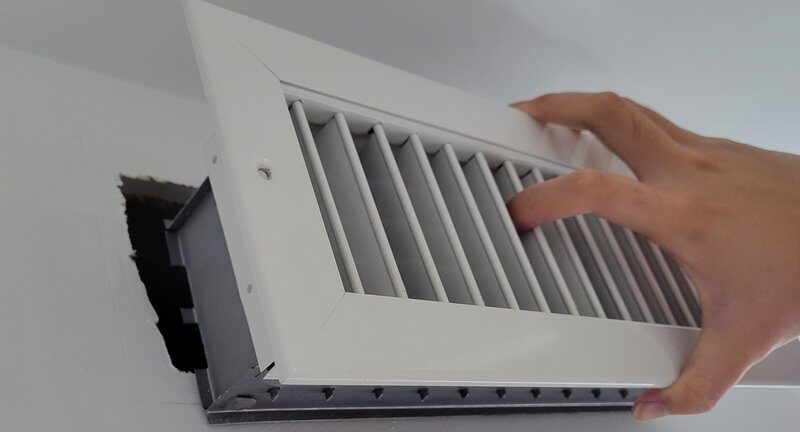
AC vents are one of the most visible parts of an HVAC system. They allow conditioned air to flow into rooms, ensuring comfort in your living or working spaces. However, issues with the AC vent can lead to uneven temperature distribution, increased energy consumption, and reduced comfort.
Common Problems with AC Vents:
- Blocked Vents: Over time, dust, debris, or even furniture can block the AC vents, restricting airflow. This can cause certain areas of the room to feel warmer or cooler than others.
- Incorrect Vent Adjustment: If the vents are not adjusted properly, they may not direct air in the desired direction, leading to poor air distribution.
- Damaged Ductwork: If the ductwork connected to the AC vent is damaged, the conditioned air may not reach the intended area, reducing the overall efficiency of the HVAC system.
How to Fix AC Vent Problems:
- Clear Obstructions: Regularly inspect the AC vents to ensure they are not blocked by furniture or debris. Clean the vents to allow proper airflow.
- Adjust the Vents: Ensure the AC vents are properly adjusted to direct the air where it’s needed. This can help create a more balanced temperature in the room.
- Inspect Ductwork: Check the ductwork connected to the AC vents for any signs of damage, such as holes or disconnections. If damage is found, repair or replace the ducts to ensure efficient airflow.
Fan Coil Duct Problems: Uneven Temperature Control
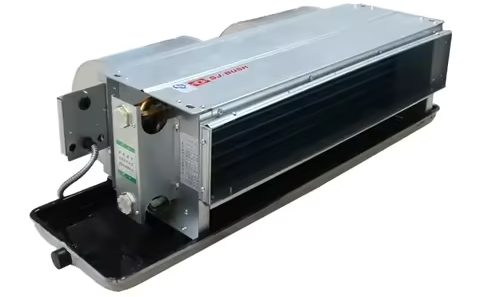
The Fan Coil Duct is another essential component in HVAC systems. It helps distribute conditioned air from the fan coil unit throughout the building. Any problems with the fan coil duct can lead to temperature imbalances, poor airflow, and an inefficient HVAC system.
Common Problems with Fan Coil Ducts:
- Leaky Ducts: Ducts are prone to wear and tear, and over time, they can develop leaks. These leaks cause air to escape, leading to energy inefficiency and poor temperature regulation.
- Dirty Coils: The coils inside the fan coil unit can become clogged with dust and dirt, which reduces the unit’s ability to effectively transfer heat or cool air.
- Obstructions: The fan coil duct can become obstructed by debris or other materials, blocking airflow and reducing the system’s efficiency.
How to Fix Fan Coil Duct Problems:
- Seal Leaky Ducts: Inspect the fan coil duct for any visible leaks. Use duct sealant or tape to seal the leaks and prevent air from escaping.
- Clean the Coils: Regularly clean the coils in the fan coil unit to ensure efficient heat transfer. If the coils are too dirty, they may need professional cleaning.
- Remove Obstructions: Check the ducts for any obstructions that may be blocking airflow. Clear away any debris or materials that are preventing air from circulating.
Flexible Ducting Hose Problems: Kinks and Blockages
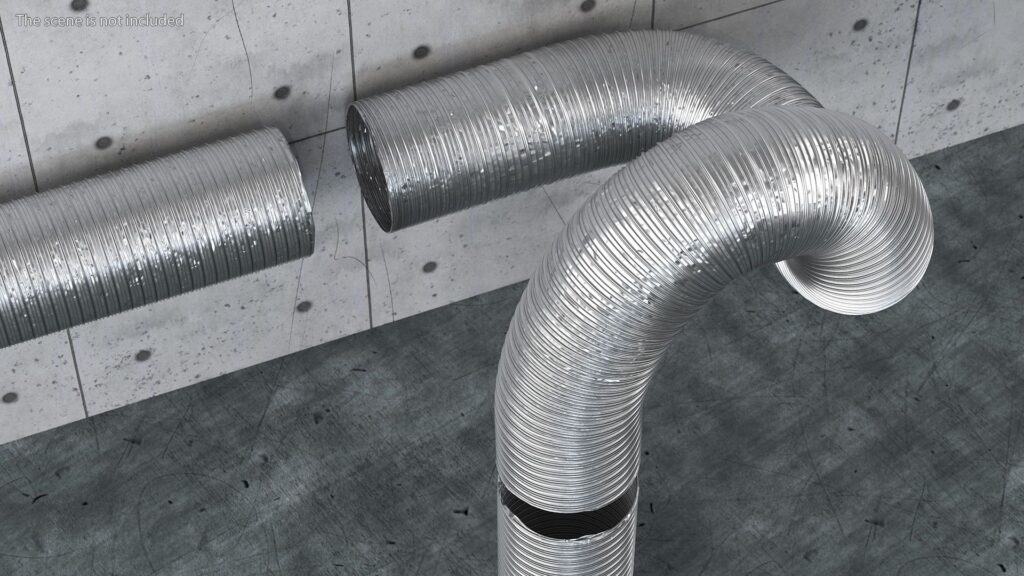
A flexible ducting hose is commonly used to connect various HVAC components and direct airflow. These pipes can bend easily, simplifying placement in confined areas. However, over time, they can become kinked, obstructed, or damaged, affecting airflow.
Common Problems with Flexible Ducting Hose:
- Kinks and Bends: Flexible ducting hoses can become kinked or bent, restricting airflow. This can lower the system’s total efficiency and lead the HVAC system to operate more strenuously than needed.
- Obstructions: Dust, dirt, or debris can accumulate inside the flexible hose, causing blockages that restrict airflow and reduce efficiency.
- Wear and Tear: Over time, the material of the flexible ducting hose can wear out, leading to leaks or cracks.
How to Fix Flexible Ducting Hose Problems:
- Unbend Kinks: Ensure that the flexible ducting hose is installed with no sharp bends or kinks. If kinks have formed, gently straighten the hose or replace it if necessary.
- Clean the Hose: Regularly clean the flexible hose to remove dust and debris that may cause blockages.
- Replace Damaged Ducting: If the flexible ducting hose is cracked or severely worn out, replace it to maintain optimal airflow and efficiency.
Duct Axial Fan Problems: Airflow Issues
The duct axial fan is responsible for moving air through the ducts in an HVAC system. If the duct axial fan malfunctions, it can cause poor airflow, inefficient operation, and increased energy consumption.
Common Problems with Duct Axial Fans:
- Motor Failures: Over time, the motor in a duct axial fan can wear out or fail, causing the fan to stop working or reduce airflow.
- Dirt and Debris: Dirt and debris can accumulate on the fan blades, reducing their efficiency and making the fan work harder.
- Noise: A malfunctioning fan can produce excess noise, signaling that it may be damaged or clogged.
How to Fix Duct Axial Fan Problems:
- Clean the Fan Blades: Regularly clean the blades of the duct axial fan to remove dirt and debris that may affect airflow.
- Replace the Motor: If the motor fails, it may need to be replaced. In this case, it’s best to consult a professional to handle the replacement.
Ducted Fan Coil Unit Problems: Inconsistent Temperature Regulation
A ducted fan coil unit is responsible for distributing heated or cooled air throughout a building. If this unit faces issues, it can cause inconsistent temperature regulation and increased energy consumption.
Common Problems with Ducted Fan Coil Units:
- Clogged Filters: Like other components, clogged filters in the ducted fan coil unit can reduce airflow and efficiency.
- Water Leaks: Condensation around the ducted fan coil unit can lead to water leaks, causing damage to the unit and surrounding areas.
How to Fix Ducted Fan Coil Unit Problems:
- Clean or Replace Filters: Regularly clean or replace the filters to ensure the unit operates efficiently.
- Inspect for Leaks: Check for any water leaks around the ducted fan coil unit and repair them promptly.
Conclusion:
By understanding the common problems associated with HVAC components, such as the plenum box HVAC, AC vents, fan coil ducts, flexible ducting hoses, duct axial fans, and ducted fan coil units, You have the ability to take preemptive measures to upkeep your system. Regular inspection, cleaning, and prompt repairs will help ensure that your HVAC system operates efficiently, reduces energy costs, and provides consistent comfort. With Airlutions, you can find reliable solutions for all your HVAC needs. Always remember, addressing small issues early can save you time and money in the long run.
FAQs
Q1: What is a Plenum Box HVAC and why is it important?
A plenum box HVAC system disperses conditioned air across your establishment. It ensures efficient airflow and helps maintain consistent temperature control in every room.
Q2: How can I improve airflow in my AC vent?
To improve airflow, clear any blockages around the AC vent, clean it regularly, and adjust the vent to direct air where it’s needed for better cooling or heating.
Q3: What should I do if my fan coil duct is leaking?
Inspect the fan coil ducts for leaks, and use duct tape or sealant to close any gaps. If the leaks persist, consult an HVAC technician for repair or replacement.
Q4: How can I prevent blockages in my flexible ducting hose?
Regularly clean the flexible ducting hose to eliminate dirt and debris. Ensure smooth airflow and prevent blockages by avoiding sharp angles or twists.
Q5: Why is my duct axial fan making noise?
A noisy duct axial fan may have dirt on the blades or a worn-out motor. Clean the blades and check the motor. If the noise continues, it may be time to replace the fan.
Q6: How do I maintain my ducted fan coil unit for optimal performance?
To keep your ducted fan coil unit running smoothly, replace or clean the filters, inspect for leaks, and clean the coils regularly to improve airflow and prevent issues.