
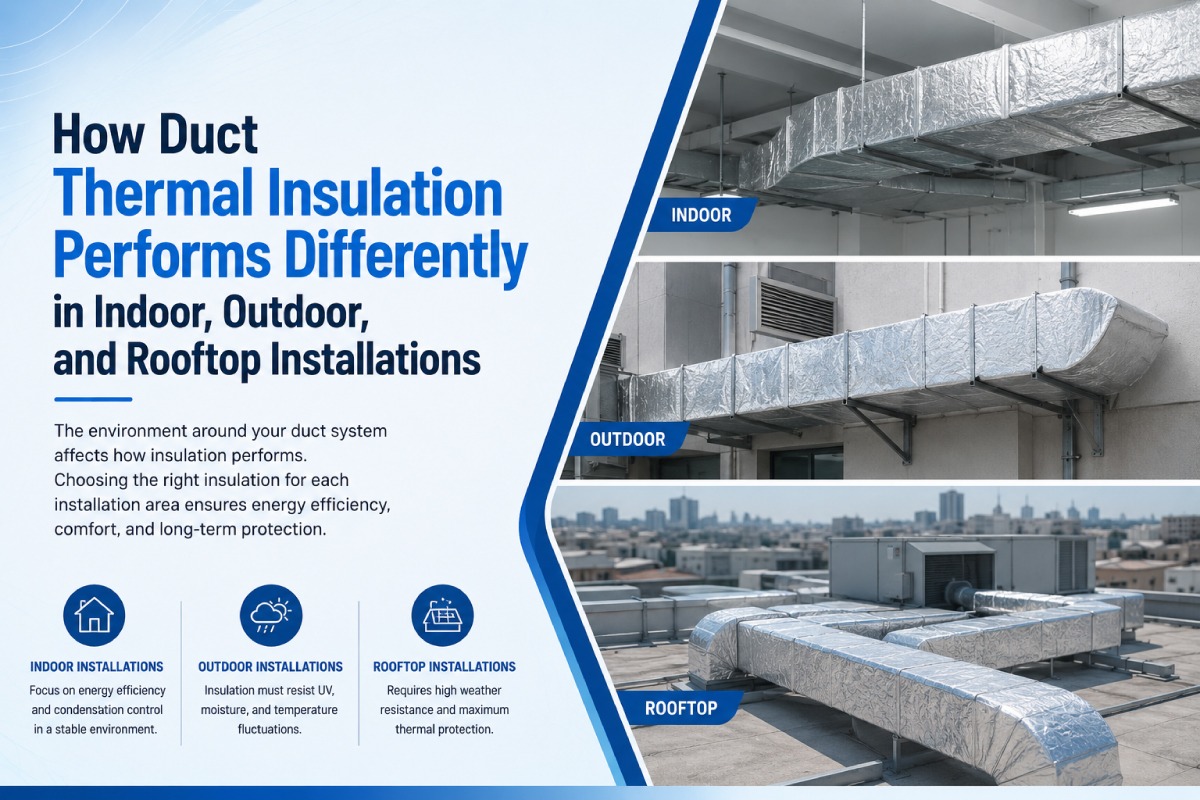
A high-quality HVAC system can still lose cooling performance with poorly insulated ducts. This loss is most evident in Saudi Arabia due to the impact of high temperatures. As ducts traverse hot or unconditioned areas, thermal insulation for ducts helps to control the temperature of the conditioned air by limiting the gain of heat and helping to control condensation. Insulating cargo helps control heat gain by maintaining the temperature of conditioned air. Designed specific solutions are required for duct installation on roofs and duct installation in outdoor and indoor areas. Visit our page if you want to avail thermal insulation service in saudi arabia.
How Does Duct Thermal Insulation Perform in Indoor Installations?
Indoor HVAC duct systems may still gain heat if installed above false ceilings, in service areas, or near mechanical rooms. The effect is further compounded by outside conditions that are hotter than the thermal conditioned space. The best thermal insulation systems will maintain low temperatures and lessen energy loss. Effective HVAC duct thermal insulation requires a continuous cover of insulation material with sealed joints, free of gaps or compressed sections. Improper installation leads to unnecessary heat transfer and condensation, while proper installation will provide the designed performance of the HVAC system.
How Does Duct Thermal Insulation Perform in Outdoor Installations?
Outdoor ductwork is subject to more extreme conditions than indoor systems and can face exposure to direct sunlight, dust, moisture and physical contact. HVAC duct insulation is negatively impacted by these conditions. In order to maintain the integrity of the insulation, the covering should be protective and allow the insulation to perform its function. Exposed ductwork should be inspected by contractors for damaged covering, open seams, compressed insulation, and entry of moisture. Small defects in insulation allow for heat gain and should be addressed to avoid efficiency loss.
How Does Duct Thermal Insulation Perform on Rooftop Installations?
Rooftop ducts in Saudi Arabia experience harsh weather. That’s why the design of duct thermal insulation focuses on blocking heat gain due to the outdoor environment. Inadequate duct insulation leads to hot inflow of air to the system before reaching the premises, which increases the working burden of the HVAC system. To improve system performance, rooftop insulation should be designed to withstand the thermal, moisture and weather elements. Sealed seams and joints of insulation prevent moisture from entering the system, while inspection of ducts at regular intervals helps in determining the integrity of the ducts.
What Common Problems Can Occur With Duct Insulation in Different Locations?
The challenges associated with duct insulation depend on the location of the duct. Most challenges for indoor ducts involve gaps due to compression and condensation. Outdoor and rooftop ducts must deal with additional challenges of heat, sunlight, dust, and moisture. One of the most common challenges is confusing duct tape thermal insulation with a full insulation system. Duct tape is only intended to aid insulation by sealing or holding it in place. Poor installation of joints and fittings results in small insulation gaps and poor performance of the system. See full blog on duct tape insulaton.
How Can Contractors Improve Duct Thermal Insulation Performance?
Selecting appropriate material and thickness of insulation depends on the location and operating conditions of the duct thermal insulation. Contractors should ensure continuous insulation, sealed joints, and appropriate insulation for outdoor and rooftop installations. Airlution’s priority for HVAC duct insulation installation is minimizing heat gain and elimination of condensation and performance issues related to insulation. Airlution can help you with professional HVAC installations in Saudi Arabia. Contact us for further information.
Conclusion
The function of Duct thermal insulation depends on whether ducts are installed in interior, exterior, or rooftop positions. Though all indoor installations require insulation to block heat transfer and condensation, exterior and rooftop ducts require more protection from desert heat and environmental elements. Selecting the appropriate insulation and ensuring a quality installation can greatly diminish the duct system’s heat gain and can improve the HVAC system. The best solution for reliable HVAC duct insulation is a system that is designed for a building’s location and climate, as well as the performance requirements of the building.
FAQs:
What Is the Best Duct Thermal Insulation for Saudi Arabia?
It depends on the duct location, heat exposure, and moisture conditions.
How Does Duct Thermal Insulation Reduce Cooling Loss?
It reduces heat gain and helps maintain cooled air temperature.
Does Rooftop Duct Thermal Insulation Need Protection?
Yes, it needs protection from heat, sunlight, dust, and moisture.
How Often Should HVAC Duct Insulation Be Checked?
It should be checked during regular HVAC maintenance.
Can Duct Tape Replace HVAC Duct Insulation?
No, duct tape cannot replace proper HVAC duct insulation.